AI in Mechanical Engineering: 10 Use Cases with ROI for SMEs 2026
AI in Mechanical Engineering: 10 Use Cases with ROI for SMEs 2026
Few industries are better positioned for artificial intelligence than machine and plant engineering: sensor data from machines, decades of engineering knowledge, recurring quoting and service processes. Yet AI in mechanical engineering remains unused in many mid-sized companies — often because it is unclear where to start for the fastest payoff. This article presents 10 proven use cases with typical impact, effort and payback.
🟢 Quick wins: fast impact, manageable effort
1. Quoting and costing assistant
AI drafts quotes from the inquiry, BOM history and past calculations. Especially in configure-to-order manufacturing, turnaround time drops drastically. Impact: quoting time cut from days to hours, higher win rate. Effort: €12,000-30,000, payback often under 12 months.
2. Technical documentation and knowledge assistant
A RAG-based assistant answers questions from manuals, drawings, standards and service reports — for engineering, assembly and service. Impact: 60-70% less search time, knowledge retention against skilled-labor shortage. Effort: €10,000-25,000. How the technology works: RAG for Companies.
3. Service ticket triage
Incoming fault reports are automatically classified, prioritized and enriched with solution suggestions from the service history. Impact: 30-50% faster first response, relieved hotline. Effort: €10,000-28,000.
4. Tender and specification analysis
LLMs extract requirements, risks and knockout criteria from specifications and tenders and match them against your product portfolio. Impact: solid bid/no-bid decisions in hours instead of days. Effort: €8,000-20,000.
🟡 Strategic use cases: high leverage
5. Predictive maintenance
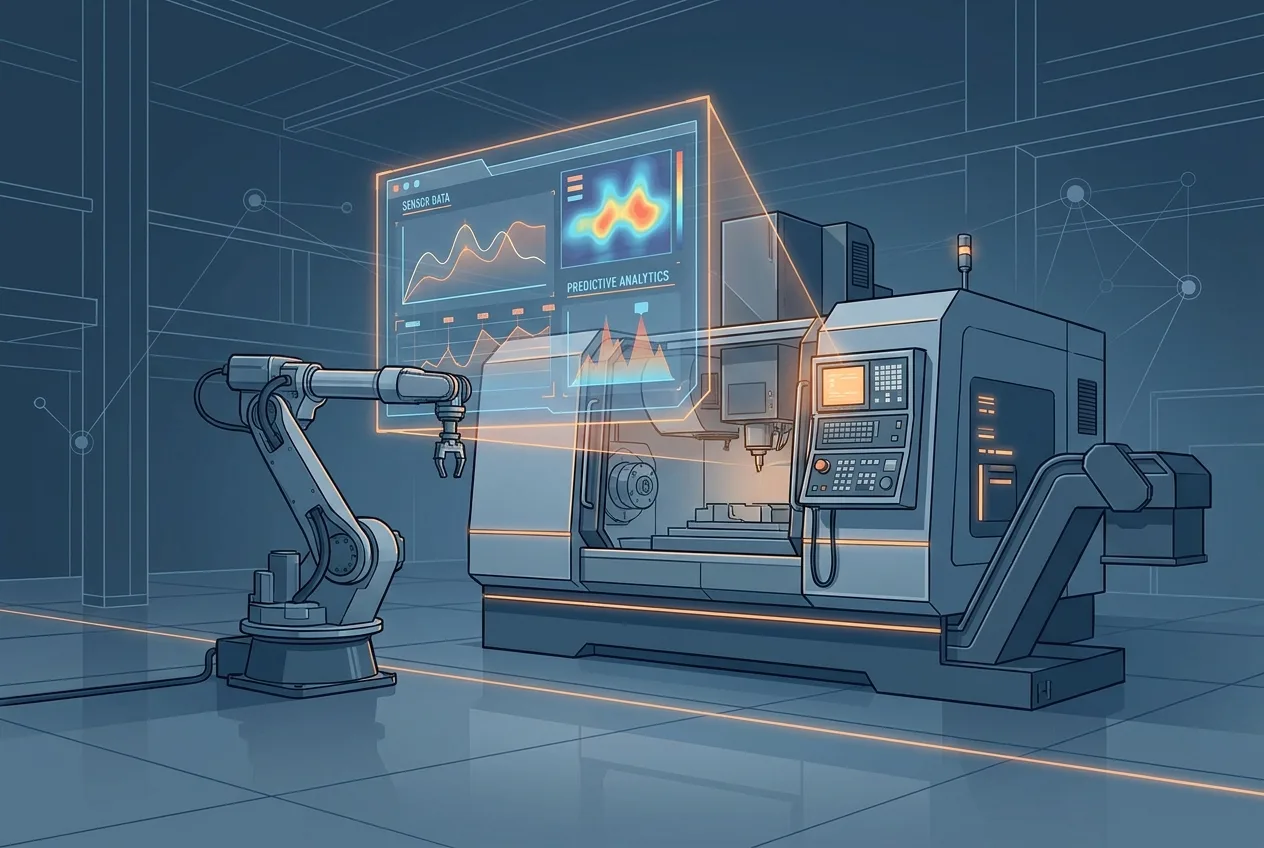
ML models detect anomalies in machine data and predict failures before they happen — as an internal tool or as a sellable service product for your customers. Impact: 30-50% fewer unplanned downtimes; new after-sales revenue. Effort: €25,000-80,000 depending on sensor setup.
6. Visual quality inspection
Camera-based AI inspects parts and weld seams inline and documents everything. Impact: less scrap and fewer complaints, relieved QA. Effort: €20,000-60,000 including hardware.
7. Production planning and detailed scheduling
AI optimizes machine allocation and sequencing under real constraints (setup times, staffing, deadlines). Impact: 10-20% higher utilization, more reliable delivery dates. Effort: €20,000-50,000.
8. Spare parts and demand forecasting
Forecasting models plan spare-parts stocks and component demand instead of blanket safety stocks. Impact: 10-30% less tied-up capital. Effort: €12,000-30,000. Deep dive: AI in Supply Chain Management.
9. Engineering assistance and variant management
AI suggests proven design solutions and reuse, checks drawings for completeness and supports the transition to configurable product platforms. Impact: shorter engineering times, fewer one-off variants. Effort: from €25,000.
10. Digital twin with AI analytics
The digital twin simulates plant behavior; AI evaluates deviations and suggests optimizations. Impact: faster commissioning, data-driven product improvement. Effort: project-specific, usually from €40,000. Basics: Digital Twin in Production.
What does getting started cost — and what does it deliver?
The quick-win use cases (1-4) start at €8,000-30,000 and typically pay back within 6-18 months. Strategic projects such as predictive maintenance pay off through reduced downtime and new service business models. For budgeting: What does AI cost for SMEs?
5 steps to your first AI project in machine engineering
- 1. Identify processes with real pain: where do delays, errors or bottlenecks occur — quoting, service, QA?
- 2. Check data availability: ERP, CAD/PDM, machine data, service history. Usually more is usable than expected.
- 3. Prioritize use cases by ROI: start small — a quoting assistant or knowledge assistant are proven entry points.
- 4. Run a pilot in 8-12 weeks: with clear metrics (turnaround time, first-fix rate, downtime hours).
- 5. Bring processes and people along: training and adapted workflows determine the impact — not the tool. See The AI Paradox.
Conclusion: machine engineering has the data — now it needs the entry point
Whether quoting, service or maintenance: in 2026, AI in mechanical engineering delivers measurable results in months, not years. What matters is choosing the right first use case — matching your data, processes and goals. For consulting specific to machine and plant engineering: AI Consulting for Mechanical Engineering.
Which use case pays off first in your company? Find out in our free AI Potential Check — a structured initial assessment of your AI potential, concrete and non-binding.
Who builds your company cockpit
Benefit from over 20 years of enterprise experience
Andreas Indorf
Managing Director, mysoftwarelab GmbH
Qualification: Founder of mysoftwarelab GmbH; with his team, builds company cockpits with AI agents for SMEs
Expertise: Over 20 years of developing and implementing IT systems for DAX companies and international corporations. Specialized in AI automation for mid-sized businesses since 2021.
Hands-on Experience: As a model operation, mysoftwarelab already runs 80% of its own IT services through AI. This hands-on experience flows directly into our client consulting.
Focus: Company cockpits in which AI agents take over recurring tasks – for companies with 5+ employees, built and run by us.
E-E-A-T Proof: All information complies with Google's E-E-A-T guidelines (Experience, Expertise, Authoritativeness, Trustworthiness) for high-quality consulting content.
Which of your tasks belong in the cockpit?
In a free callback we clarify whether a company cockpit with AI agents fits your business – for companies with 5+ employees.
- An individual company cockpit instead of single AI tools
- AI agents take over recurring tasks, your team approves
- Built and run by us – fixed monthly price
From the lab
The most important AI news of the week – as a comic.
Every Wednesday, ByteUndGlitch explains one real AI story in eight panels. Satirical, accessible, free.
Read the latest episode